Start with height, aisle width, and doorways
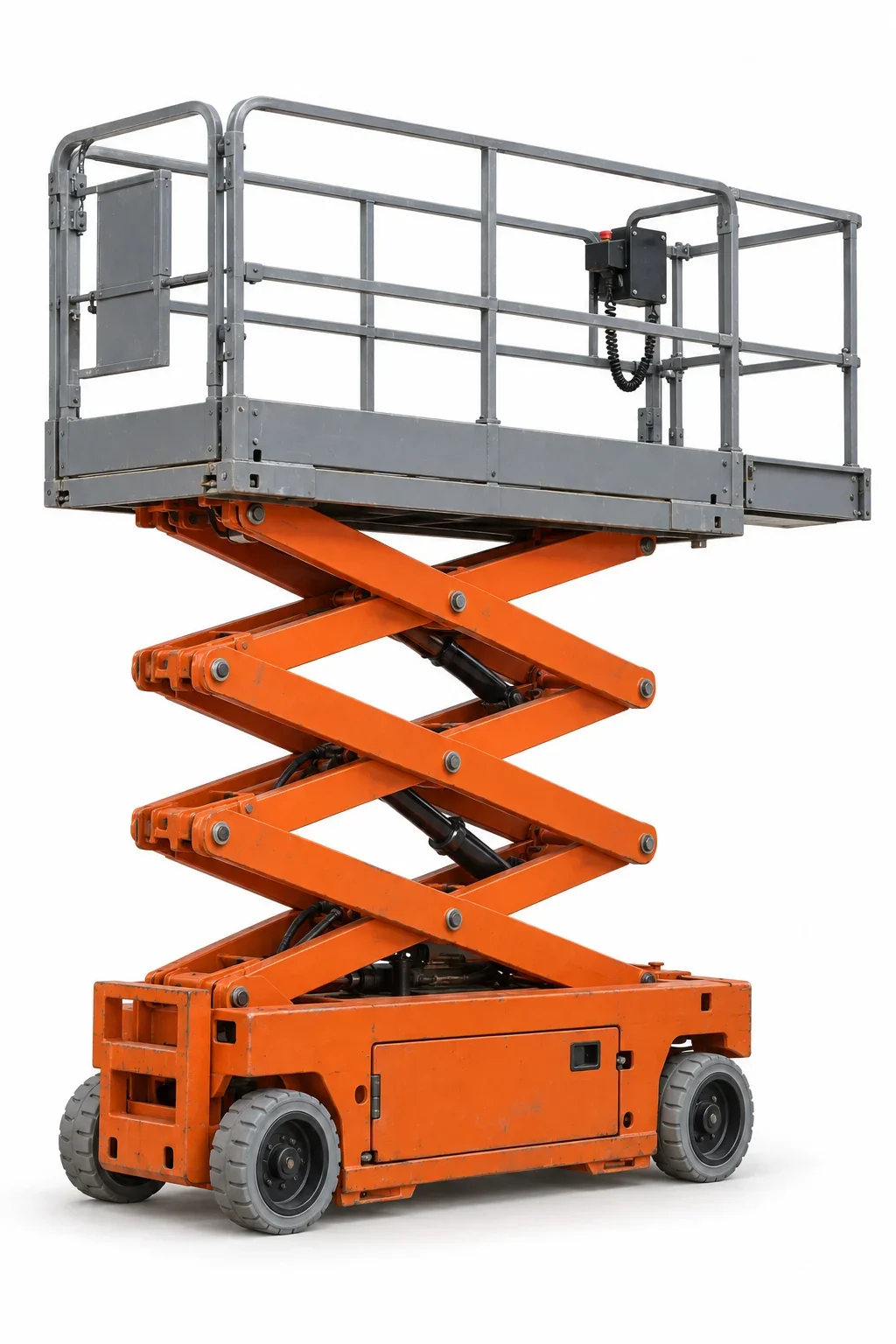
The machine must sit below the task. Measure the working height, then confirm whether the lift can pass through doors, elevators, and staging corridors. Narrow‑aisle models turn inside tight storage runs and between set elements without disturbing layouts.
Why indoor Albuquerque work favors electric
At local elevation, electric drivetrains avoid the power loss seen in small combustion engines and keep exhaust out of enclosed spaces. That stability matters for lighting adjustments, inventory counts, and ceiling work where consistent travel and lift are expected.
Platform size and deck extension
- Small decks: Better for dense racking and crowded stages
- Larger platforms: Room for fixtures, conduit, or multiple tools
- Extension decks: Add reach across ceiling grids or over conveyors without moving the base
Floors, finishes, and weight limits
Slab scissors are built for smooth surfaces. Check floor load ratings, expansion joints, and any sensitive finishes common in offices or studios. Non‑marking tires help protect polished floors.
When a different lift makes sense
If obstacles block a straight approach—such as ductwork, conveyors, or scenery—consider a boom with outreach. See /aerial-lift-rental/ or specific options at /boom-lift-rental/.
Keep the comparison specific
A useful equipment discussion starts with the work height, the practical machine position, the route into the area, the floor or ground along that route, and the people, tools, or material involved. Those details clarify whether vertical access, outreach, or material placement is the real constraint.