Map the perimeter and traffic first
- Where does the line run relative to curbs, ramps, and soft ground? Irregular surfaces may require shorter panel runs and more weighted bases.
- What moves through the gates—box trucks, lifts, or foot traffic? Gate width and turning space should match the largest expected vehicle.
- Are there elevated tasks near the line? Keep lift work zones and swing radii clear. For aerial access comparisons, see /aerial-lift-rental/.
Local conditions that change the setup
Open sites around Albuquerque can see frequent gusts. Panel height, site-stability factors choice, and bracing frequency should reflect exposure and surface conditions; the actual conditions and site procedures govern how panels are stabilized. Dust and debris also influence where pedestrian lanes cross vehicle paths and where screens or signage are attached.
Choosing panels and barricades
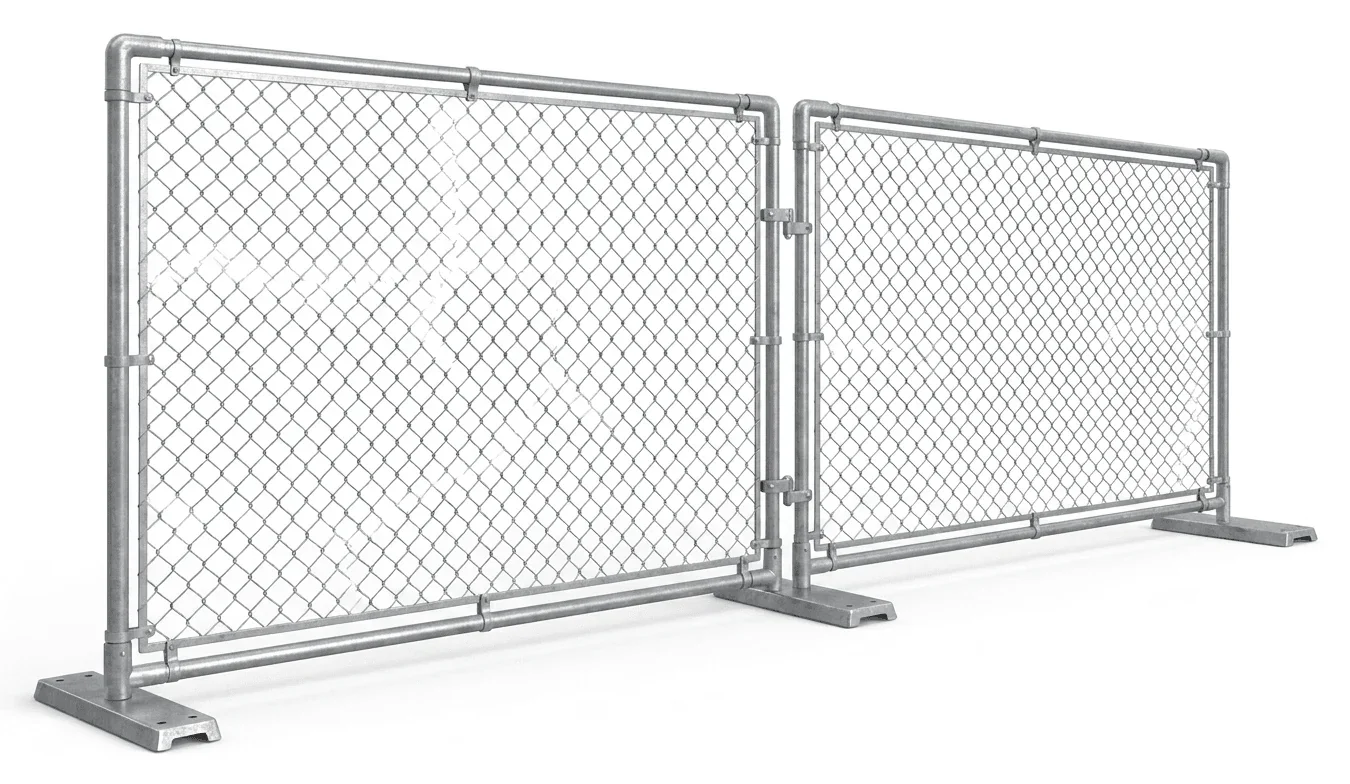
- Panels for site security: taller runs with controlled gate points protect compounds and tool yards. Shorter runs suit interior staging.
- Pedestrian barricades: low-profile units define lines at entries, loading docks, or set access points without blocking sightlines.
- Visual control: screens reduce line‑of‑sight and dust movement but add wind load; spacing and bracing adjust accordingly.
Gates, corners, and shared space
Corners concentrate load and often sit on inconsistent surfaces near curbs. Gate areas need flat approaches and room for vehicles to straighten before entering. When forklifts or telehandlers work close to fencing, confirm aisle width and turning radii; compare /forklift-rental/ and /telehandler-rental/ for typical maneuver envelopes.
Lighting and after-hours planning
If the perimeter must remain active at night, plan mast locations outside drive lanes and pedestrian gates. See /generators-light-towers-rental/ for power and coverage considerations.