Start with site geometry
- Can the unit park below the task or does it need to sit outside a controlled zone? Longer cable runs reduce voltage and add trip points.
- Is there a clear route for towing or forklift pickup between load-in and the work area? Soft shoulders and decomposed surfaces change the trailer size you can move.
- Are lights covering a broad open yard or a tight façade? Wide throw favors higher masts and larger heads; close work favors shorter masts with glare control.
Local factors that change the comparison
Albuquerque’s elevation reduces combustion power relative to sea-level ratings. For quiet zones and indoor stages, electric solutions avoid power loss and exhaust. For outdoor night work, frequent evening winds can push light spill and mast stability limits; the actual conditions and the selected unit’s instructions govern when a mast can be raised. High-altitude tuning and sound attenuation matter on productions and in neighborhoods near industrial sites.
Generator planning checkpoints
- Load profile: steady lighting and camera rigs prefer stable output; power tools create surge loads. Group circuits to keep voltage drop in check.
- Fuel or electric: diesel offers longer intervals on remote sites; battery or hybrid power helps in sound-sensitive areas.
- Access and footprint: note door widths, grade breaks, and any interior ramp angles if a unit must be staged inside.
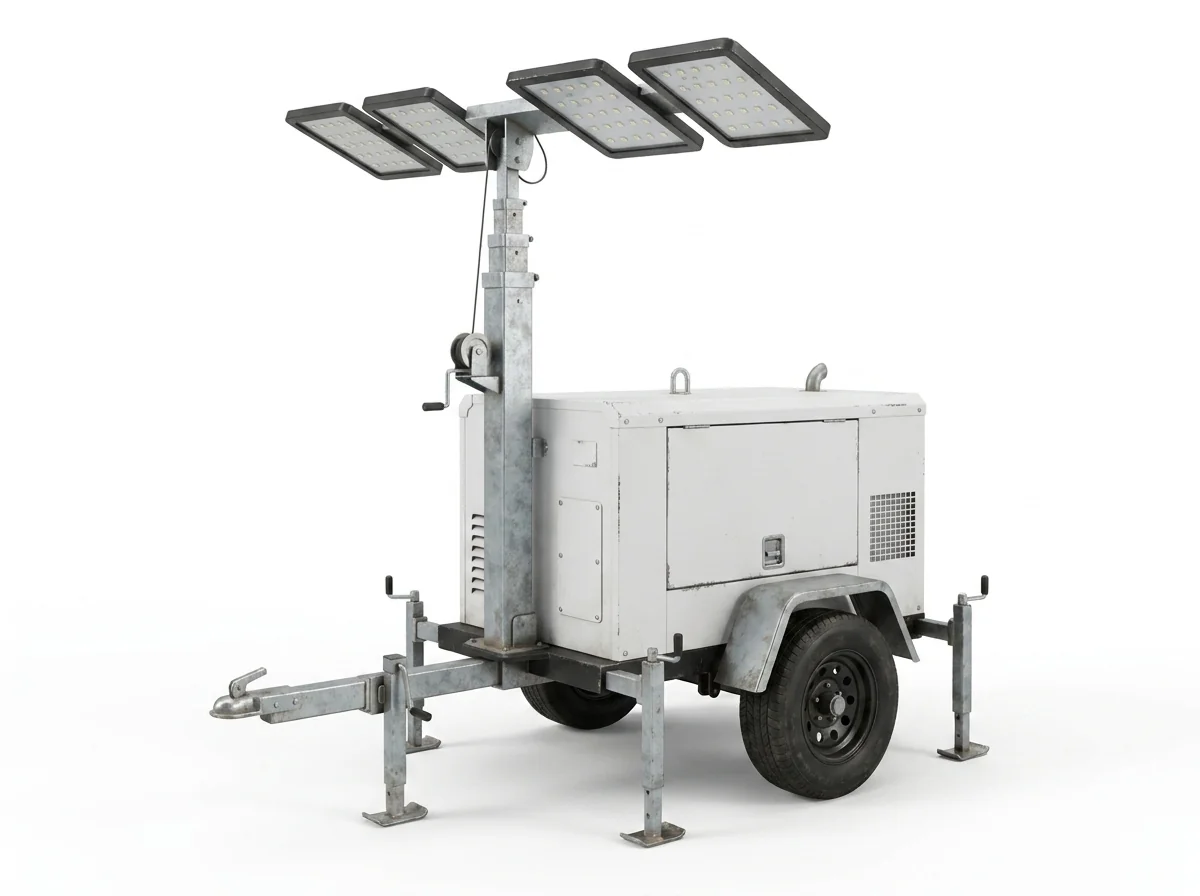
Light tower planning checkpoints
- Mast height versus wind exposure: taller masts increase sail area and require conservative siting. Verify surface compaction and tie-off permissions per site procedure.
- Light distribution: open yards need broad, uniform coverage; street-side or façade work benefits from directional heads and cutoff to control spill.
- Power source: stand-alone towers simplify yard coverage; plug-in towers pair well with central generators on film compounds or event grids.
Common pairings on local work
- Film compounds: quiet generators near sound-sensitive zones with plug-in towers for controlled spill. See aerial access options at /aerial-lift-rental/.
- Warehouse yards and logistics lots: diesel towers for perimeter visibility, centralized generators for tools and trailers. For elevated maintenance inside high bays, compare /electric-scissor-lift-rental/.
When lifts and power share space
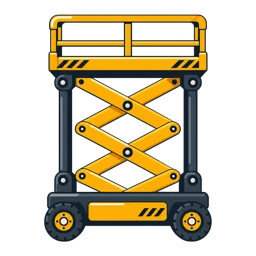
If a scissor or boom must work within the lighting footprint, confirm turning radius, outrigger zones, and cabling paths. For outdoor elevation, review /rough-terrain-scissor-lift-rental/ and /boom-lift-rental/.