Start with approach and footprint
- Can a delivery truck stay straight during set-down, or is there a tight turn with curbs or bollards? Note minimum turning radius and overhead clearance.
- What’s the surface under the container? Soft or sloped ground affects door alignment and water shedding.
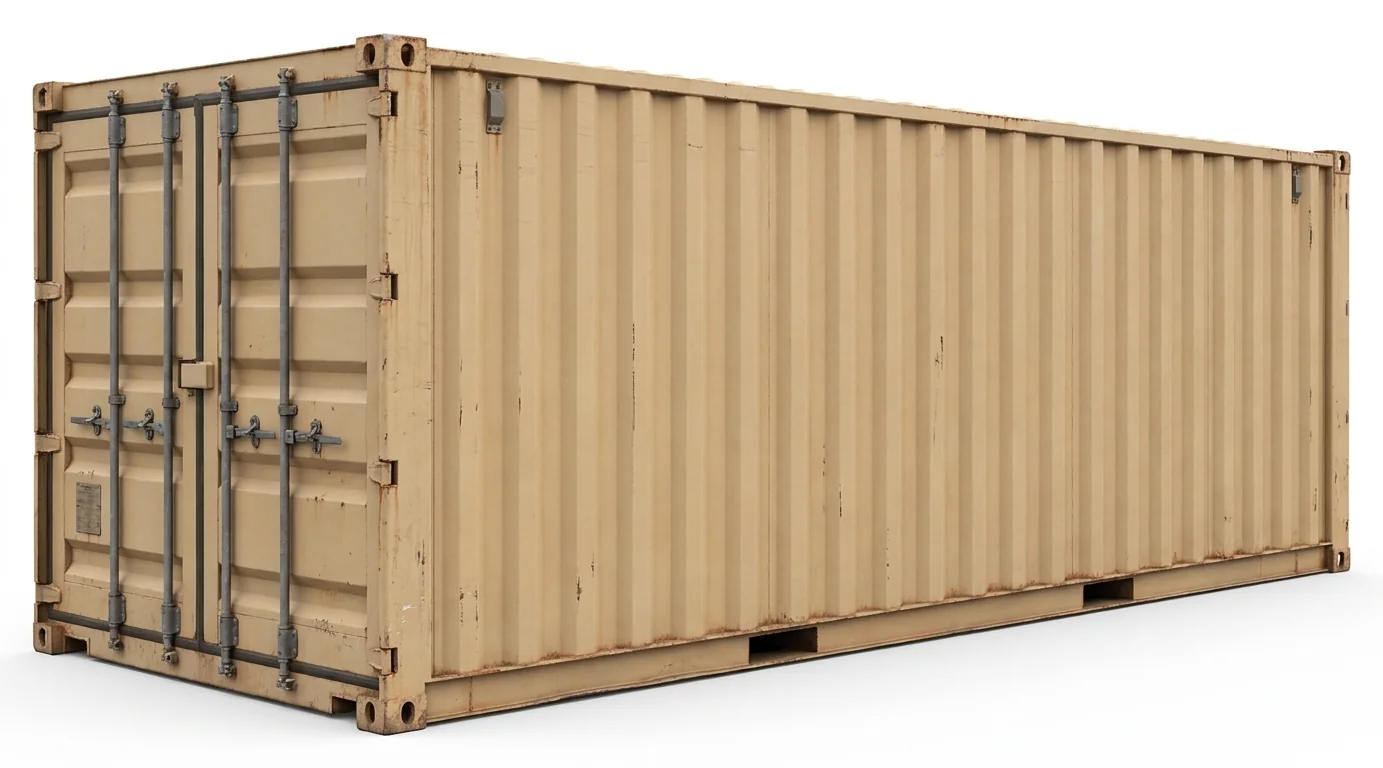
- Are doors facing active traffic, pedestrian routes, or staged sets? Door swing zones should not cross lift paths.
Local considerations
High-desert dust and temperature swings can affect sensitive gear. On productions and tech builds, sealed storage and interior organization reduce handling time. Afternoon winds argue for siting doors away from the prevailing gust direction and allowing stable footing at the threshold. In busy yards tied to regional logistics, container rows should leave enough aisle width for forklifts without forcing multi‑point turns.
Sizing and access planning
- Volume versus reach: a larger container reduces trips but demands more set-down space and straighter access. Smaller units fit constrained lots or interior bays.
- Door clearance: measure vertical and lateral space for full door travel; nearby fencing or stored materials can block doors.
- Load sequence: heaviest items stored at ground level near the entrance minimize handling time in windy conditions.
Integrating with lifts and yard flow
If forklifts or telehandlers load the container, verify fork pocket access, approach slope, and aisle width. For elevated picks into mezzanines or trailers, see /telehandler-rental/ and /forklift-rental/. When containers support elevated maintenance, coordinate with /electric-scissor-lift-rental/ for interior aisles, or /rough-terrain-scissor-lift-rental/ for outdoor lots.
Site security and lighting context
Temporary fencing can shape safe aisles and deter through‑traffic in mixed‑use yards. For after‑hours access, plan power and mast placement; compare options at /generators-light-towers-rental/ and /temporary-fencing-barricades-rental/.