Job geometry first
- Required landing height and horizontal offset from the machine’s front tires
- Load size, weight, and center of gravity
- Staging room for approach and retreat, including turning width
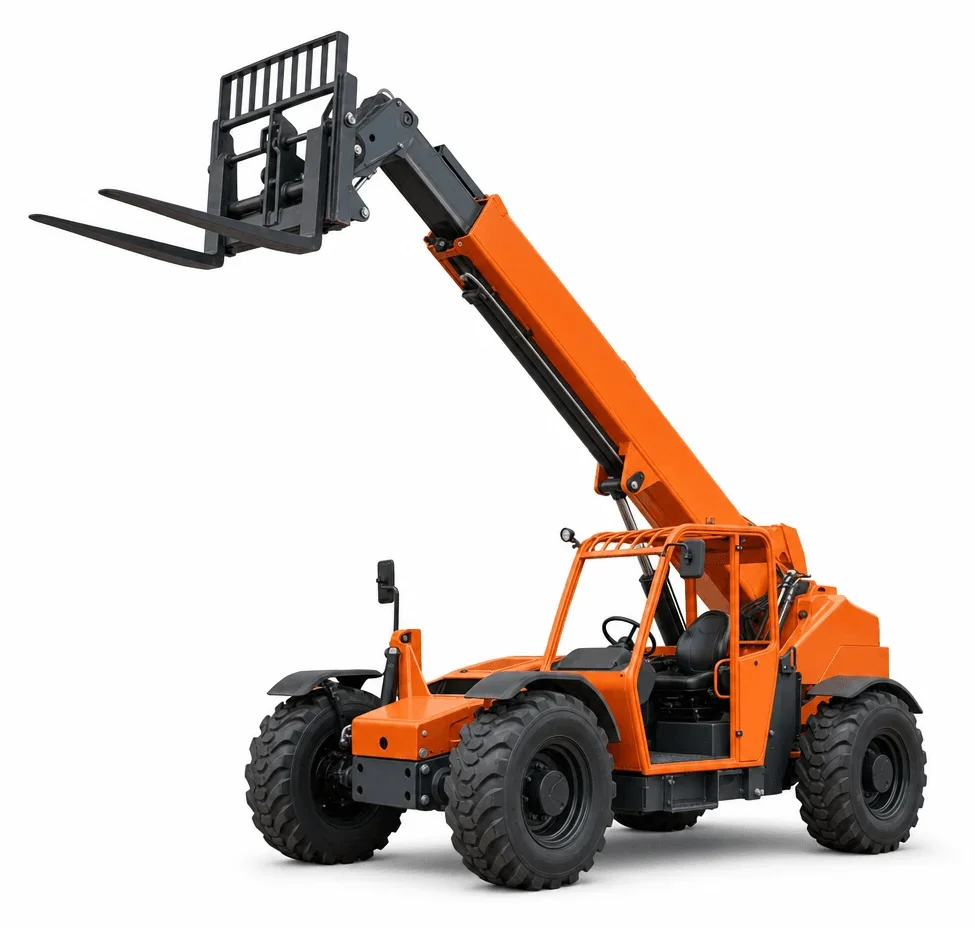
If the target is straight ahead on a nearby slab, a forklift at /forklift-rental/ might be simpler. If the landing point is elevated or set back, telehandlers provide the needed reach.
Albuquerque-specific considerations
- Altitude: Combustion engines may feel weaker at elevation, affecting travel on grades and boom functions under load. Plan for realistic cycle times and consider electric or hybrid options where appropriate.
- Wind: Elevated placements on open frames or decks increase sail effect. The selected unit’s instructions, load charts, and site procedures govern whether a pick proceeds.
Capacity and reach checkpoints
- Maximum placement height and outreach from the front axle
- Rated capacity at that point on the load chart, not just maximum capacity
- Fork length or carriage type for pallets vs. bulky set pieces
- Ground conditions: yard surfaces vs. finished slab influence tire and suspension needs
Common local tasks
- Material drops to upper levels on industrial sites along distribution corridors
- Set construction where panels and lighting trusses must land beyond an edge
- Rooftop deliveries of mechanical units in mixed-use properties
Related categories
- Straight-mast handling on slab: /forklift-rental/
- Basket access for installation after delivery: /telescopic-boom-lift-rental/ or /articulating-boom-lift-rental/